app.doctorcrm.io/dashboard
DoctorCRM
Dashboard
Board
Leads
Appointments
Reports
Marketing
Ad Performance
AL
Alex Lund
Off Label
Dashboard
Search leads, appointments…

Welcome back, Alex

A snapshot of everything moving through your clinic pipeline.

TOTAL LEADS
128
12%vs prev.
BOOKED
34
8%vs prev.
CONVERTED
19
15%vs prev.
REVENUE
€48,200
27%vs prev.
CONVERSIONS OVER TIMELast 30 days
Meta Form 42Website Form 61Call 8WhatsApp 12

Know exactly what books patients.

Follow every patient from first click to booked appointment - and see exactly which marketing filled your diary.

Why It's Different

In healthcare, a booking has to be traced before it can be repeated.

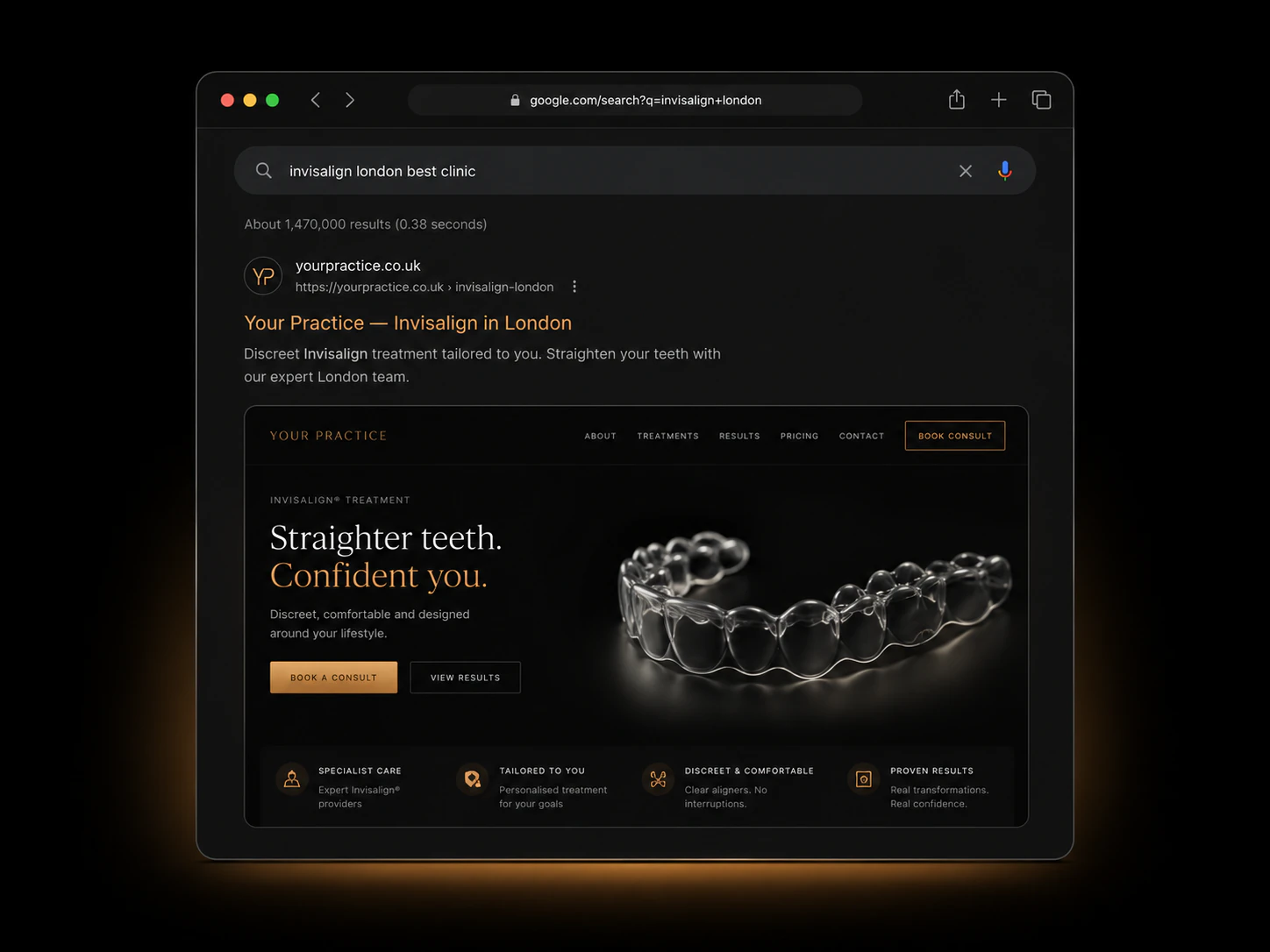
Here's what most agencies won't tell you: in healthcare, the click and the booking are almost never the same moment. Scroll through one patient's decision — the one your analytics never saw.

Day 123:47 · her phone

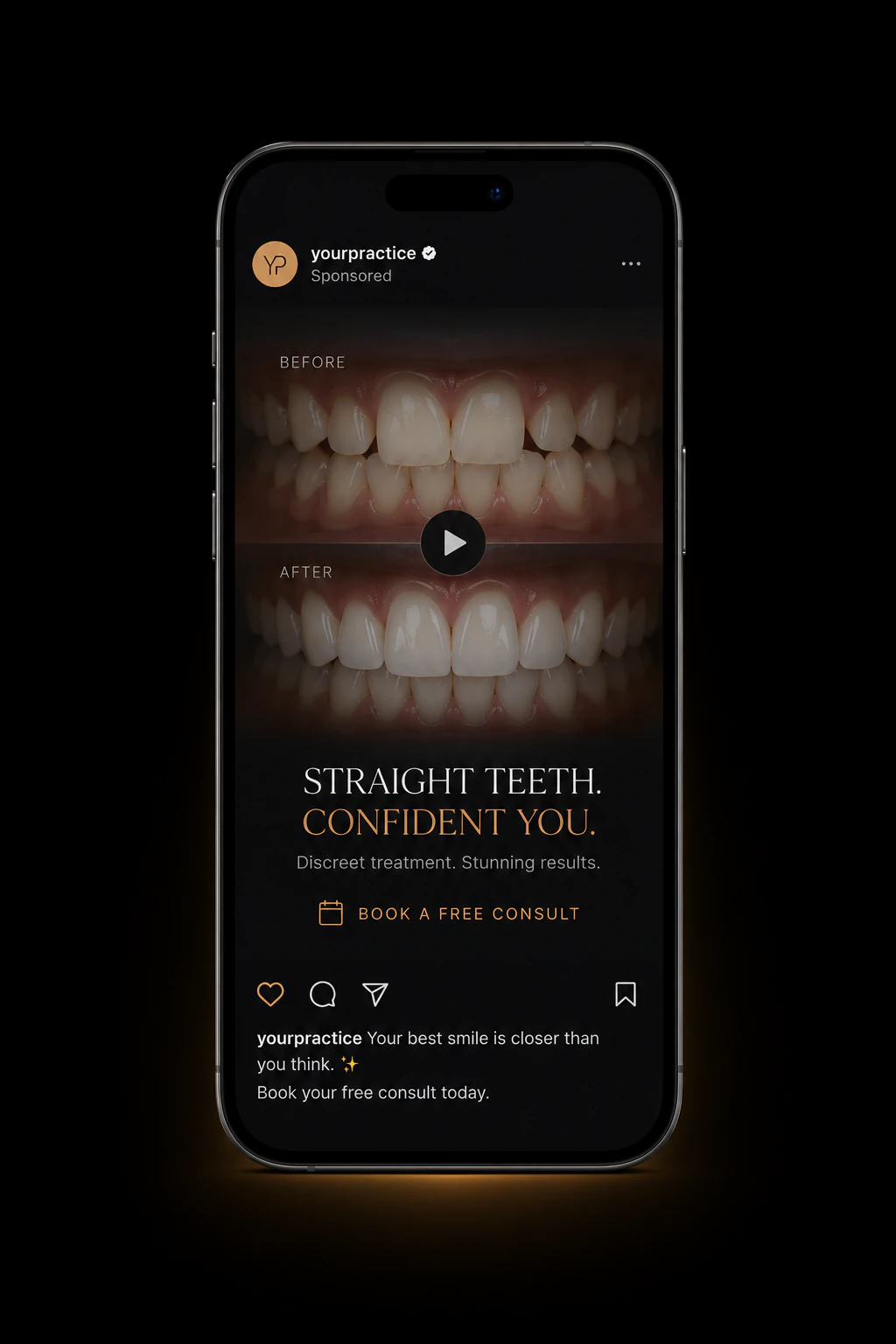
She sees your ad on Instagram

A 20-second pause on a before-and-after, mid-scroll. No click. Nothing to track.

Patient sees the clinic ad on her phone

One patient's decision

Day 03

Day 1
Day 9
Day 23
Day 31

Why the numbers lie · three reasons

01

The booking happens offline, weeks after the click

Healthcare is a considered, often anxious decision - nothing like buying online. The patient who books today may have first found you a month ago, on a different device, through a channel no one is crediting. Click-and-form-fill tracking simply never sees that booking: it counts the cheap signals and misses the only one that pays the bills - a patient in the chair.

02

Patient data makes measurement a compliance risk

Patient information is special-category data under UK GDPR, and the rules around consent, anonymisation and what you send to ad platforms are strict - more so in aesthetics, dental and fertility. Most agencies either push raw data into Meta and Google, or give up on offline tracking altogether. Neither is acceptable in a YMYL niche.

03

Closed-loop tracking is infrastructure, not a dashboard

What tells you which marketing books patients isn't a prettier report - it's the plumbing underneath: conversion tracking that survives a multi-week, multi-device journey, call tracking so phone bookings count, and a clean, compliant connection between your ad accounts and the CRM where bookings are recorded. Get it right and you can move budget with confidence.

What It Covers

What healthcare analytics with us actually covers

Closed-loop analytics isn't one job - it's six disciplines working together. Read them the way we build them: in order, each one making the next possible.

01

Measurement strategy & tracking plan

What it is

Before a single tag fires, we define what actually counts: what a conversion is, what a booked patient is worth, and how events map to the way patients really move from first click to booked appointment.

Why it matters

Most tracking is installed the way the tool suggests, not the way your practice books patients. Get the plan right first and every number afterwards means something; skip it and you measure activity instead of patients.

02

Conversion & event tracking

What it is

Tracking set up to record the actions that matter - enquiry forms, booking requests, calls, chat - and to hold across multiple visits and devices, with a clean, consistent way of tagging where every visitor came from.

Why it matters

A patient who finds you on a phone, researches for three weeks, then enquires on a laptop should still be credited to the channel that first reached them. Tracking that breaks across sessions quietly hands credit to the wrong source.

03

Call tracking

What it is

Tracking which marketing source produced each phone call, and tying booked phone appointments back to the campaign, page or search that drove them - not just the web forms.

Why it matters

Most healthcare bookings happen on the phone. A setup that only counts web forms is blind to the majority of your bookings, and makes the channels that drive calls look like they underperform when they may be your strongest.

04

Closed-loop CRM & reception integration

What it is

Connecting your marketing to where bookings are actually recorded - your reception system or CRM - and feeding the outcome back: enquiry to booked to attended to paying patient, so each stage traces to its source.

Why it matters

This is the loop almost no one in the niche closes. With it, you see not just which channel produced leads, but which produced leads that became paying patients - the difference between a cheap enquiry and a valuable one.

05

Attribution & ROI reporting

What it is

One report you can actually read: cost per enquiry, cost per booking, lead quality, and which activity produced revenue - instead of a wall of impressions and reach. Losses shown with the same clarity as wins.

Why it matters

A dashboard you can't act on is decoration. The point of measurement is decisions: where to put the next pound, what to stop, what's quietly working. Clear attribution moves budget toward patients.

06

Data compliance & governance, built in

What it is

Every part of the setup checked against UK GDPR and ICO guidance: patient information treated as special-category data, consent respected, and outcomes fed back to ad platforms only in aggregated, anonymised form - never raw health data.

Why it matters

A tracking setup that measures well but mishandles patient data is a liability, not an asset. Measurement and compliance aren't a trade-off here; we build the governance in from the start, not bolt it on after a complaint.

None of these work in isolation - they're one system, delivered in a deliberate order. That order is The Patient Acquisition System.

The Patient Acquisition System

Measurement, in a deliberate order.

The same system we apply to every engagement - here, focused on measurement itself: we diagnose before we track, build the loop before we report, and measure everything against booked patients.

Phase 01

Audit & strategy

We start by finding out what your current tracking can and can't see: how your marketing is measured today, where bookings are going uncredited, which channels are being given credit they didn't earn, and the journey a patient actually takes before they book. You get a clear picture before we change a single tag.

Phase 02

Tracking & foundations

We plan measurement around the patient's real journey, not the platform's defaults: what counts as a conversion, what a booked patient is worth, and the technical foundation underneath - clean event tracking, call tracking, and a consistent way of tagging every source, set up to GDPR standard. The groundwork every later number depends on.

Phase 03

Closing the loop

We connect your marketing to where bookings are actually recorded - your reception system or CRM - and feed the outcome back, enquiry to booked to paying patient, with outcomes shared to ad platforms in anonymised, compliant form. Every connection traces revenue to its source. This is the part almost no one in the niche gets right.

Phase 04

Growth & refinement

Once the loop is live, the work doesn't stop. We read the numbers that matter - cost per enquiry, cost per booking, lead quality - and move budget toward what's producing patients, away from what isn't. This is where measurement compounds, month after month: the better the data, the sharper every other decision gets.

01 / 04

When we say we apply The Patient Acquisition System to your measurement, we mean the tracking, the loop and the reporting are one system - accountable to the only number that matters: a booked, paying patient.

One Source Of Truth

Everything your marketing does, in one loop.

The CRM pulls from every channel a patient can arrive through, and connects to the booking system where they convert - so the whole journey lives in one place, not five disconnected dashboards. Watch the loop close.

Eight channels in. One booked patient out. Outcomes fed back aggregated & anonymised — and the loop closes.

Industry Proof

What the data says about marketing you can't measure.

Don't take our word for it. Here's what the evidence shows about how marketing actually gets measured, where the credit goes wrong, and the bookings it's quietly losing you.

Most marketing can't prove what actually works

Marketing Week · Kantar · Numen, UK

32.9%

rarely or never measure marketing ROI

37.0%

never measure conversion-rate lift

37%

of credit misallocated by last-click

The booking happens on the phone - and stays invisible

Ruler Analytics · BIA / Invoca · Econsultancy

58%

attribute no revenue to phone calls

9-15×

higher conversion: phone vs web leads

34%

run attribution across most channels

What you can't measure, you can't improve

Marketing Week · industry benchmarks, UK

25.1%

always measure campaign ROI

~6%

measure nothing at all

1.2×

more likely to win bigger budgets

The Bottom Line

Every one of these is a pound you either learn from or lose track of. Marketing measured properly doesn't just report better - it turns the budget you already spend into more booked patients, because you can finally see which part is working and which part isn't.

What Makes Us Different

Most agencies can measure an online checkout. A booked patient is a different problem.

Plenty of agencies 'do reporting.' Far fewer can connect a click to a booked, paying patient - and fewer still can do it without putting patient data at risk. Here's what sets our measurement apart.

Most agencies

Analytics & conversion with us

Stop at the click and the form fill, then assume revenue followed

Track all the way to booked, paying patients

Build dashboards that look impressive in a report

Build measurement around enquiries, bookings and revenue

Count web forms only - phone bookings stay invisible

Track calls and web together, so the channels that drive calls get credit

Reuse last-click, e-commerce tracking that breaks on a long medical journey

Track the real multi-week, multi-device journey to the booking

Push patient data into ad platforms, or skip offline tracking entirely

Compliant by default: UK GDPR / ICO, anonymised, consent-aware

Fill the report with vanity metrics: reach, impressions, clicks

Show what produced revenue: cost per booking, lead quality, ROI

Treat your clinic like any other tracking setup

Understand how patients research and how clinics actually book

The difference isn't that we track harder. It's that healthcare measurement is what we do, so the attribution, the compliance and the proof are built in from the start, not learned on your budget.

Common Questions

Healthcare measurement questions, answered

Once the tracking is connected, clean reporting usually follows within a few weeks. Confident channel-level ROI takes a little longer, because enough bookings need to flow through for the patterns to be trustworthy - a high-volume clinic gets there faster than a low-volume specialist. We start with strategy and a tracking plan before touching a single tag, so you're never waiting on guesswork.

Want to know where your healthcare marketing actually stands?

Most clinics are spending a real budget without a clear answer to one question: which activity is producing booked, paying patients? Book a strategy call and we'll start with the Diagnose phase - a clear look at what your current tracking can and can't see, where the credit is going wrong, and where your budget is being spent in the dark. You'll know exactly what to fix before you commit to anything.

No pitch, no obligation.

Healthcare-only · London-based · UK-wide · Response within 24h

Sources

  1. 1. Marketing Week / Kantar - "Language of Effectiveness Survey 2024" (1,200+ brand-side marketers, UK): 34.2% rarely/never measure marketing ROI; 39.2% rarely/never measure conversion-rate improvement.
  2. 2. Marketing Week - "Language of Effectiveness Survey 2022" (1,610 brand-side marketers, UK): 28.4% always measure campaign ROI; ~6.9% conduct no marketing-effectiveness analysis.
  3. 3. Ruler Analytics - "Marketing Attribution Statistics", 2025 (UK): 62% of marketers fail to attribute revenue to inbound phone calls.
  4. 4. Econsultancy - Measurement & Analytics research (cited via Ruler Analytics, UK): only 39% carry out attribution on all or most marketing activities.
  5. 5. BIA Advisory Services / Invoca - inbound-call benchmarks (industry estimate): inbound calls ~10-15× more likely to convert than web leads.
  6. 6. Numen Technology - attribution analysis (global, directional): last-click misallocates up to 40% of conversion credit.